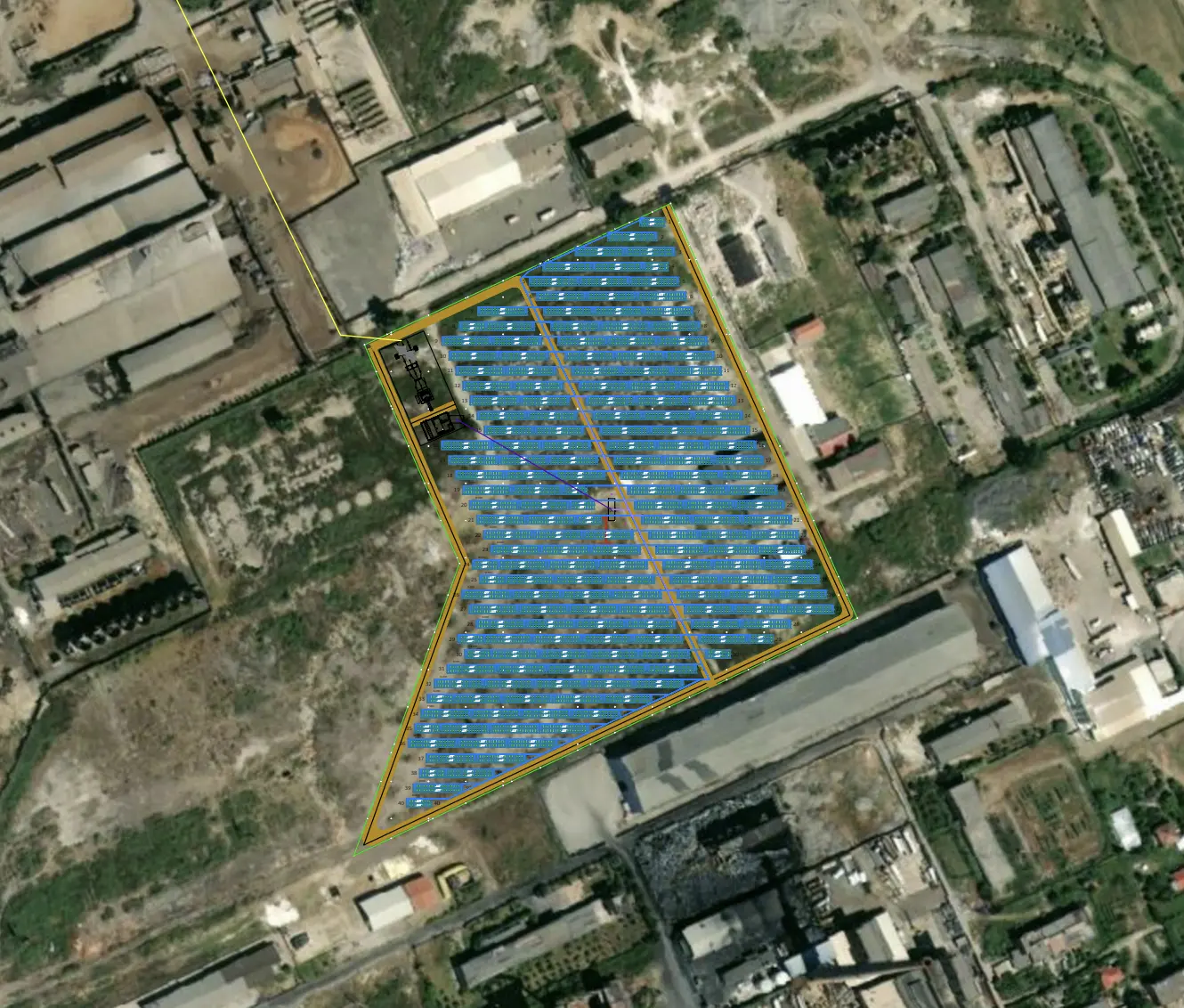
The project consists of the development of a grid-connected photovoltaic (PV) power plant located within the former Metallurgical Complex area in the Municipality of Elbasan, Albania. The project has been prepared in line with Albanian regulatory frameworks governing renewable energy production and grid integration, supporting national targets for increasing renewable energy capacity and improving energy security.
The primary objective of the project is to harness solar energy potential in the region through the installation of a medium-scale PV system, optimized based on detailed solar irradiation assessments, meteorological data analysis, and energy yield simulations using specialized software tools such as PVsyst. The study incorporates long-term climate datasets (Meteonorm, PVGIS, NASA-SSE) to ensure reliable performance forecasting.
Technically, the plant is designed with a total installed DC capacity of approximately 4.68 MWp and an AC capacity of 4.0 MW. The system utilizes high-efficiency monocrystalline PV modules rated at 660 W, mounted on fixed-tilt structures with an optimized ground coverage ratio (GCR) of 0.6 and row spacing of 8 meters to minimize shading losses. The electrical configuration includes multiple inverter units, combiner boxes, underground cable routing systems, and a connection to the national grid via a 35 kV transmission line linked to the Metalurgjiku substation.
The site is characterized by industrial land with suitable topography and existing infrastructure access, enabling efficient construction and logistics. Civil works include access roads, drainage systems, cable trenches, and perimeter fencing. Environmental considerations focus on minimizing land disturbance, managing stormwater, and ensuring compliance with environmental standards.
The plant is expected to generate approximately 7,147 MWh annually, contributing to sustainable energy production while ensuring long-term operational reliability and maintainability over its lifecycle.