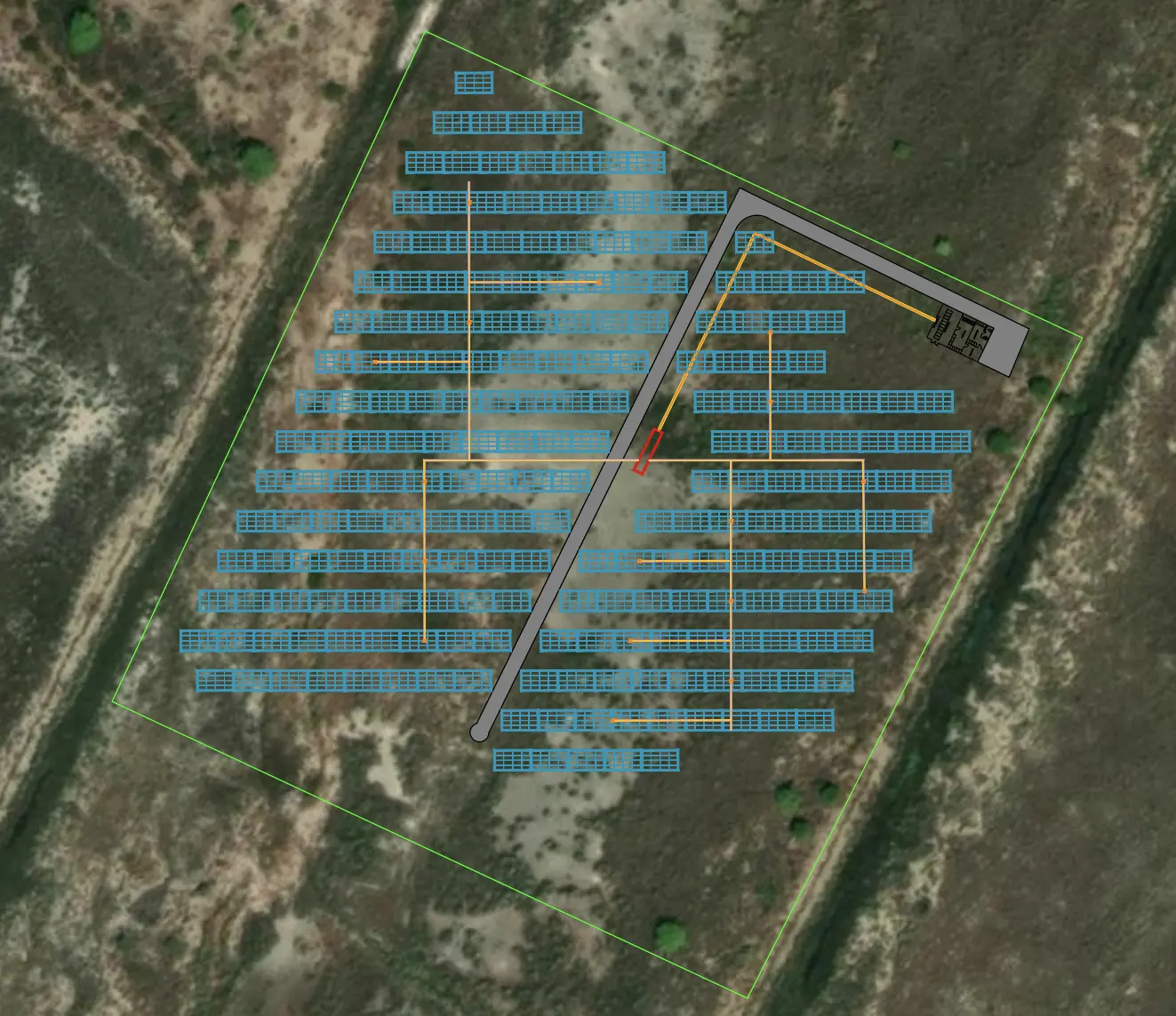
The project consists of the development of a ground-mounted photovoltaic (PV) power plant with an installed capacity of approximately 2 MW in the municipality of Fier, southern Albania. The project is part of the country’s ongoing efforts to increase renewable energy generation in line with national energy strategies and European directives on clean energy transition.
The proposed plant is located in the village of Topojë, characterized by flat terrain and favorable solar irradiation conditions, with an annual global horizontal irradiation of approximately 1552 kWh/m². The site selection ensures optimal exposure, minimal shading, and accessibility via internal roads designed within the plant layout.
Technically, the system comprises a DC installed capacity of 2.403 MWp and an AC capacity of 2.0 MW. The plant utilizes high-efficiency monocrystalline photovoltaic modules (Trina TSM-DE18M II series), mounted on fixed metal support structures anchored into the ground. The mounting system is designed to optimize tilt (30°) and spacing (10.5 m between rows) to balance land use efficiency and minimize shading losses.
Energy conversion is achieved via two central inverters (Sungrow SG1000), connected through underground low- and medium-voltage cabling systems designed according to IEC standards. The internal electrical network operates at 20 kV, ensuring efficient transmission to the grid connection point.
The project includes comprehensive civil works such as access roads, drainage systems, cable trenches, and perimeter fencing. Environmental considerations include proper stormwater management and minimal land disturbance during construction.
The plant is expected to generate approximately 3,454 MWh annually, with a performance ratio of around 81.8%. The operational lifecycle accounts for module degradation over time and includes maintenance strategies to ensure long-term efficiency and reliability.