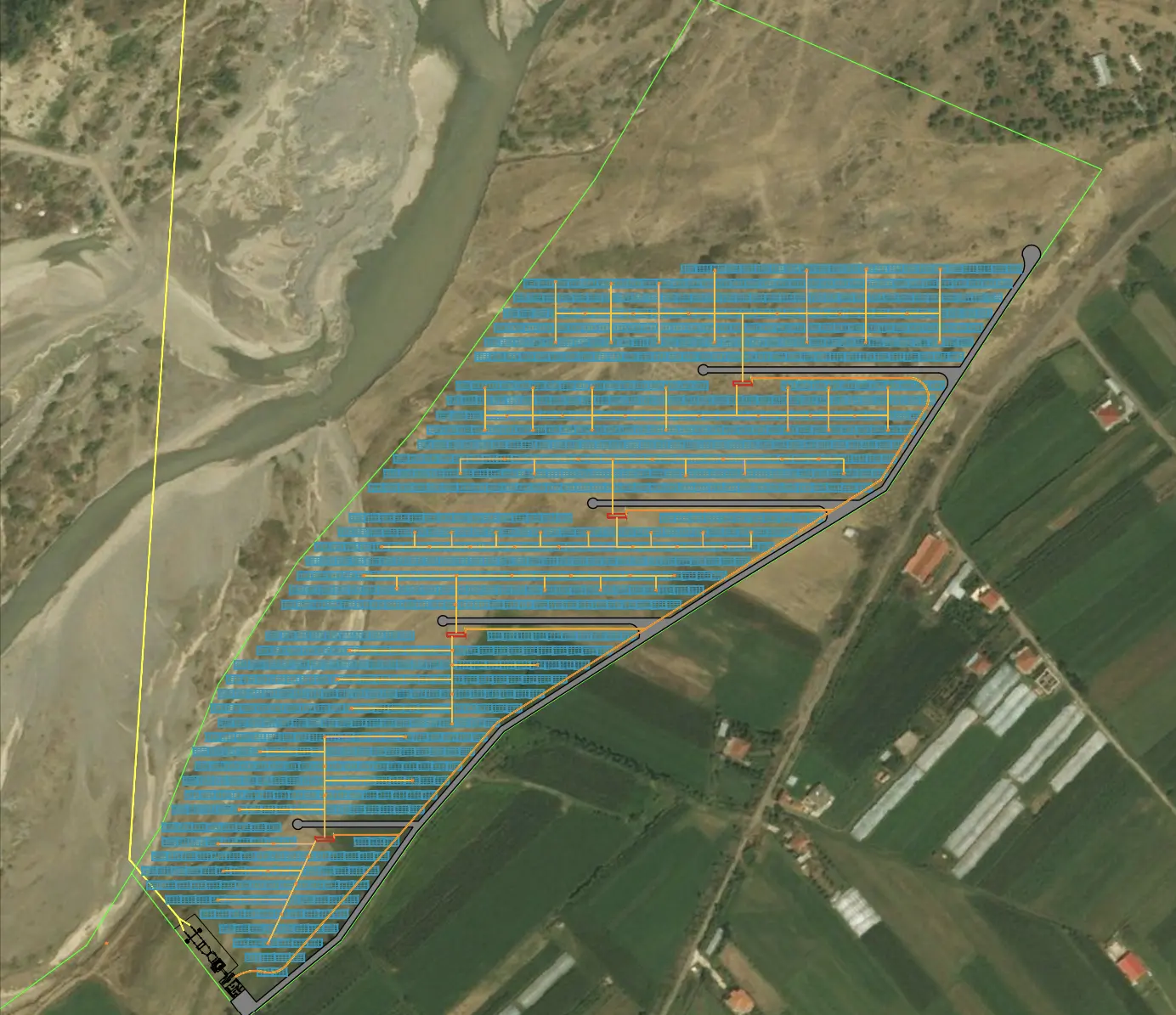
The Jagodinë Photovoltaic (PV) Plant is a utility-scale solar energy project developed in the Elbasan region of Albania, designed to support the country’s transition toward renewable energy and improved energy security. The project has been prepared in accordance with Albanian regulatory requirements governing renewable energy production, grid connection, and environmental compliance, supported by detailed technical, financial, and environmental studies.
The primary objective of the project is the generation of clean electricity through solar photovoltaic technology, contributing to diversification of the national energy mix and reduction of greenhouse gas emissions. The plant has an installed capacity of approximately 10 MW and is designed using high-efficiency monocrystalline PV modules (Trina Solar ~680 Wp), optimized for local irradiation conditions (GHI ~1552 kWh/m²/year based on Meteonorm data).
The project site is characterized by favorable solar exposure and relatively flat terrain, enabling efficient layout and optimal row spacing (GCR ~0.55). The system configuration includes string-based architecture with centralized inverter stations (ABB/Sungrow units), medium-voltage transformation, and a 35 kV grid connection via an approximately 2.4 km electrical line. Underground cable routing is designed בהתאם to technical standards, ensuring safe installation depths and thermal performance.
Construction involves site preparation, mounting structure installation, module placement, electrical works, and grid interconnection. Environmental considerations include minimal land disturbance, optimized layout to reduce shading losses, and low operational emissions.
The plant is designed for long-term operation (≥25 years), with performance degradation and auxiliary consumption accounted for in energy yield assessments. Routine maintenance, monitoring systems, and protective equipment ensure operational reliability and efficiency along lifecycle.