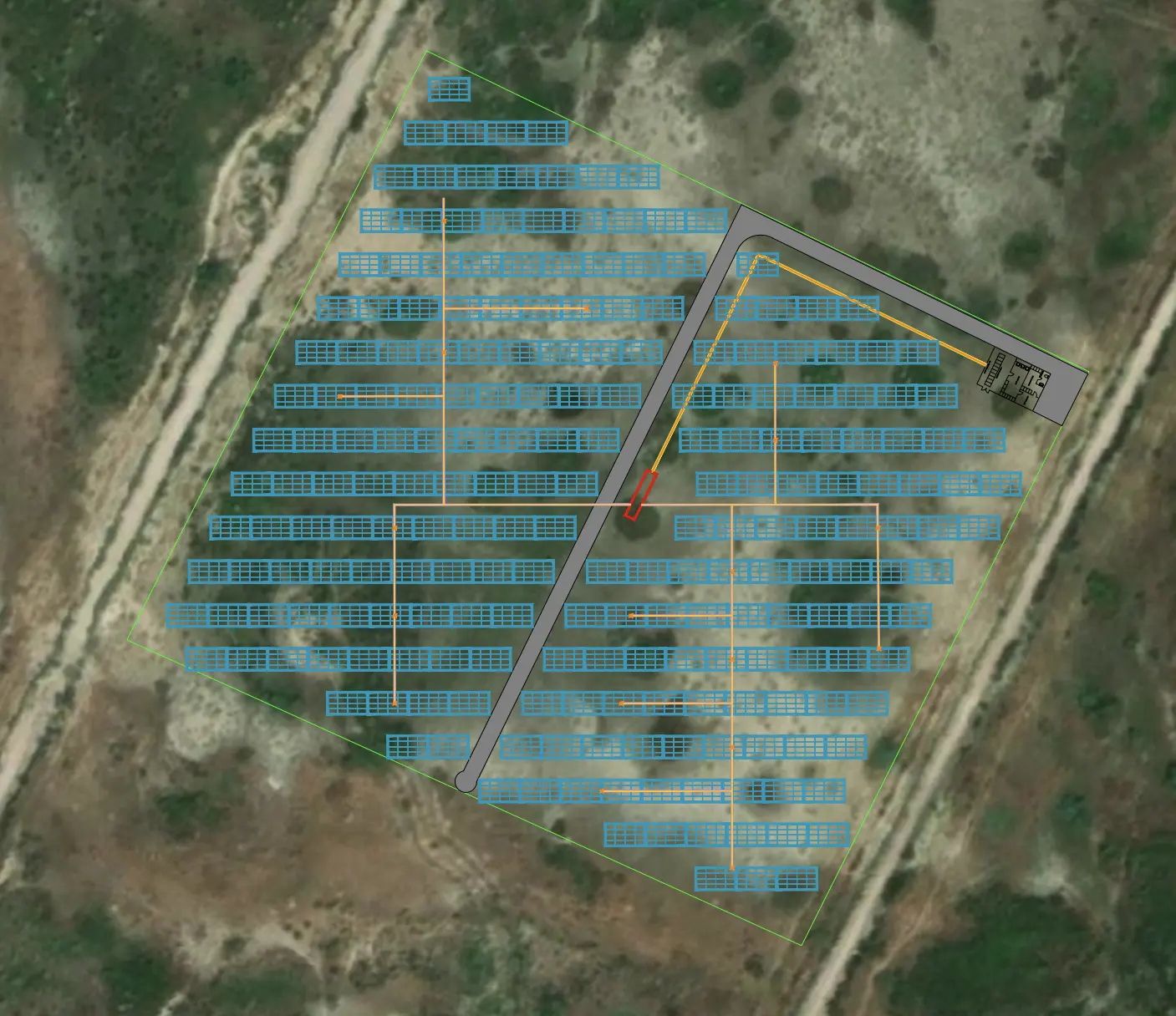
The project consists of the development of a 2 MW grid-connected photovoltaic (PV) power plant located in Topojë village, within the Municipality of Fier, Albania. The project is part of Albania’s ongoing efforts to diversify its energy mix and increase the share of renewable energy sources in accordance with national energy strategies and EU-aligned regulatory frameworks.
The plant is designed with a total installed DC capacity of 2.403 MWp and an AC capacity of 2.0 MW, optimized to maximize energy yield while maintaining system efficiency and grid compliance. The system utilizes high-efficiency monocrystalline photovoltaic modules (Trina Solar, ~680 Wp), arranged in fixed-tilt mounting structures with a tilt angle of 30° and optimized spacing to minimize inter-row shading. The mounting system consists of galvanized steel structures anchored into the ground with driven piles.
Electric power conversion is achieved via two central inverters (Sungrow SG1000), connected to an internal medium-voltage network operating at 20 kV. The electrical design follows IEC standards, ensuring minimized transmission losses and high operational reliability. Underground cabling systems are used for both low and medium voltage connections, enhancing safety and durability.
The site covers approximately 28,000 m² and is characterized by favorable solar irradiation conditions (~1552 kWh/m²/year), contributing to an estimated annual energy production of 3,456 MWh. Environmental considerations such as shading analysis, land optimization (GCR ~0.5), and long-term module degradation have been incorporated into the design.
The construction approach includes site preparation, installation of mounting structures, module placement, inverter stations, and grid connection infrastructure. The plant is designed for a lifecycle exceeding 25 years, with performance degradation accounted for in energy forecasts. Monitoring, security systems, and remote communication ensure efficient operation and maintenance throughout its lifecycle.