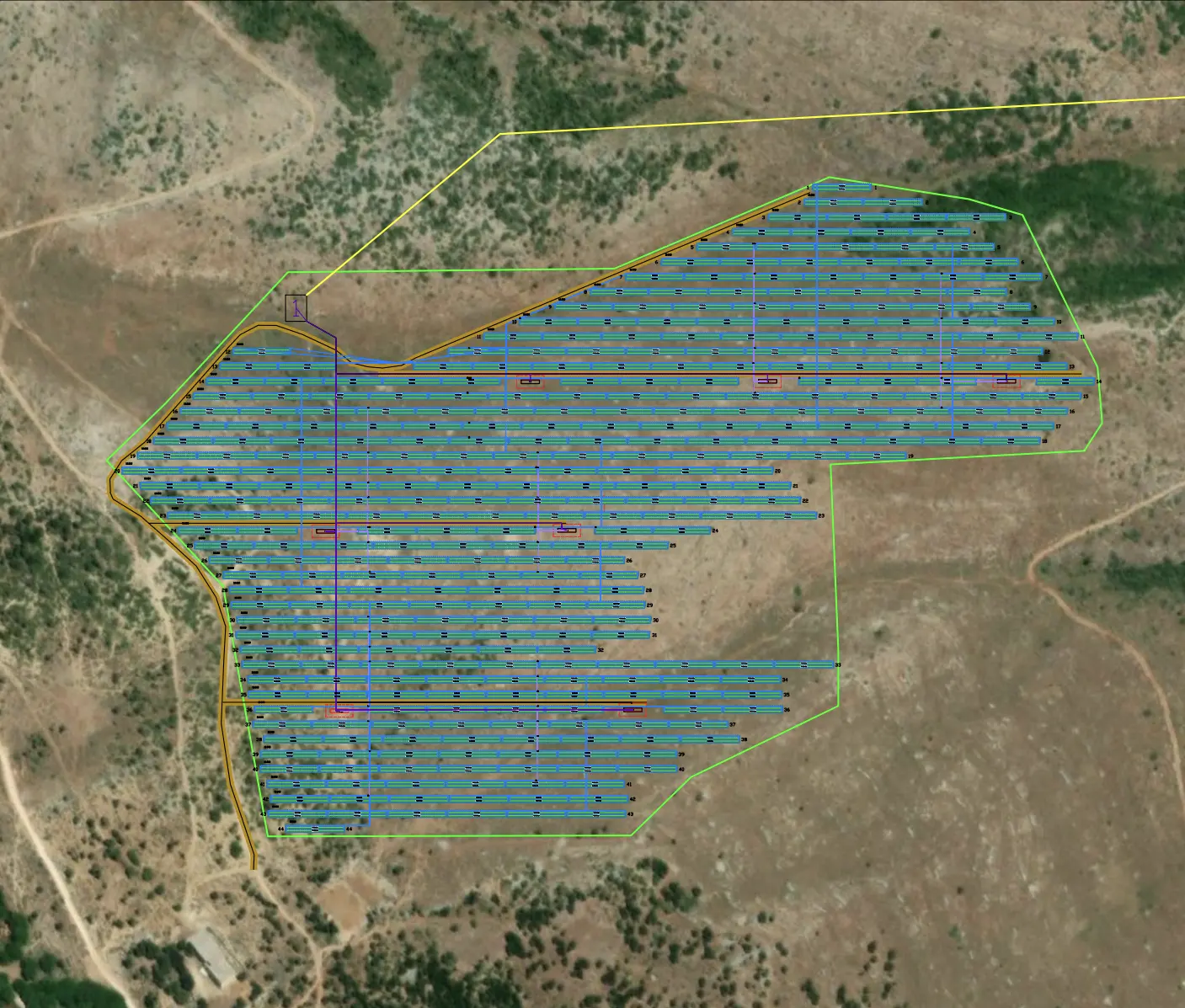
The PVPP Terpan project is a utility-scale photovoltaic power plant with an installed DC capacity of approximately 14.7 MWp, located in the Terpan Administrative Unit within the Municipality of Poliçan, Berat Region, Albania. The project is developed by TK Green shpk in accordance with the Albanian regulatory framework for renewable energy generation and grid connection requirements defined by the Transmission System Operator (OST).
The primary objective of the project is to contribute to Albania’s renewable energy portfolio by harnessing solar energy potential in the region, characterized by favorable solar irradiation levels (approximately 1550–1600 kWh/m²/year). The plant is designed to generate clean electricity and feed it into the national grid via a medium- and high-voltage connection infrastructure linked to the 110 kV transmission network.
Technically, the plant consists of approximately 21,775 high-efficiency photovoltaic modules (Trina Solar 670 Wp), mounted on fixed-tilt metal structures anchored into the ground using driven pile foundations. The mounting system is optimized for land-use efficiency with a ground coverage ratio of approximately 50%. The DC power is converted to AC using 53 string inverters (Sungrow SG250HX), ensuring high system efficiency and grid compliance.
The electrical infrastructure includes DC cabling systems, inverter stations, internal medium-voltage collection network, and a transmission line connection to the nearest substation. The project also incorporates grounding systems, auxiliary consumption considerations, and losses due to aging and system unavailability.
The site spans approximately 174,000 m², with terrain and climatic conditions suitable for long-term operation. Environmental considerations include minimal land disturbance, optimized layout to reduce shading losses, and integration into existing infrastructure corridors.
The plant is expected to operate over a lifecycle of 25–30 years, with gradual module degradation accounted for in energy yield projections. Annual energy production is estimated at approximately 20,000 MWh, contributing significantly to sustainable energy generation in the region.