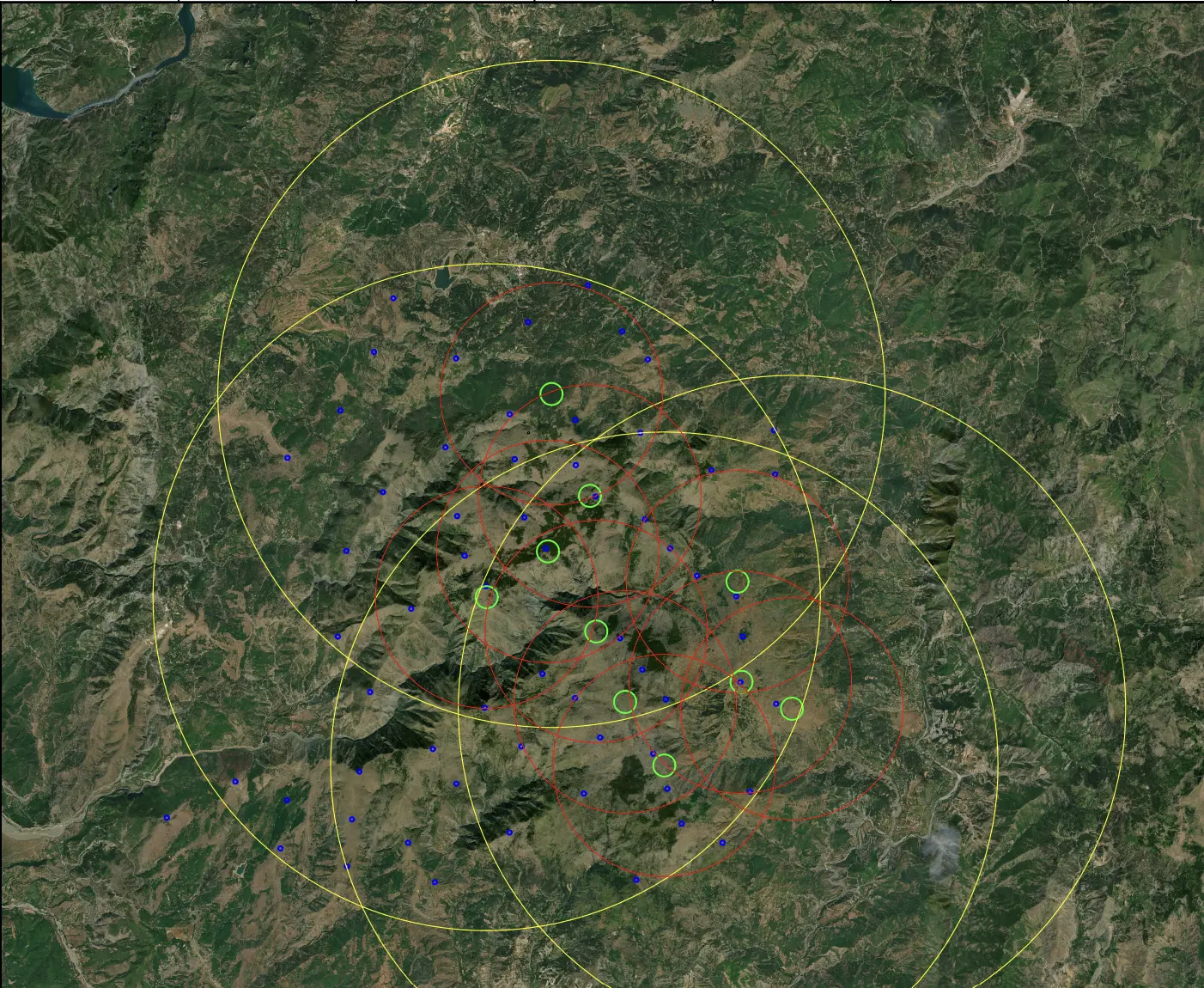
The WTG Terbuni Wind Farm is a proposed onshore wind-energy development with a planned installed capacity of approximately 300 MW in the Municipality of Pukë, Albania. The project is being developed by GO GREEN SH.P.K. and is intended to increase the contribution of renewable energy to Albania’s electricity system while supporting the country’s energy-transition and decarbonisation objectives. The development is subject to the applicable Albanian planning, construction, environmental, energy and grid-connection legislation, together with the technical requirements of the Transmission Grid Code and the relevant connection procedures of OST sh.a.
The current technical concept comprises approximately 50 horizontal-axis wind turbines, each rated at 6.0 MW. The selected reference turbine for the feasibility modelling is the GE Renewable Energy 6.0-164, equipped with a three-bladed rotor with a diameter of 164 m. The turbine layout covers elevated and mountainous terrain, with turbine elevations identified in the technical report ranging approximately from 890 m to 1,426 m above sea level. Based on the energy assessment, the expected production is approximately 840 GWh per year, corresponding to an indicative average capacity factor of approximately 32%.
Each turbine will be installed on a reinforced-concrete foundation, supported by engineered excavation, backfilling, granular sub-base and reinforced concrete works. The project will include internal access roads, crane hardstands, electrical collection circuits, control and communications systems, meteorological monitoring, and a central 400/35 kV wind-farm substation. Electricity will be exported through an approximately 12.8 km, 400 kV transmission line to the Koman 400/220/10 kV substation.
Construction will require phased civil, mechanical and electrical works, including road formation, foundation construction, turbine transport and erection, cabling, substation installation and grid commissioning. Environmental considerations include the mountainous terrain, snow conditions, drainage, erosion control, landscape and visual effects, noise, biodiversity, construction traffic and restoration of temporarily disturbed areas. The wind farm is expected to operate for approximately 25 years, subject to periodic maintenance, component replacement and eventual decommissioning or repowering.